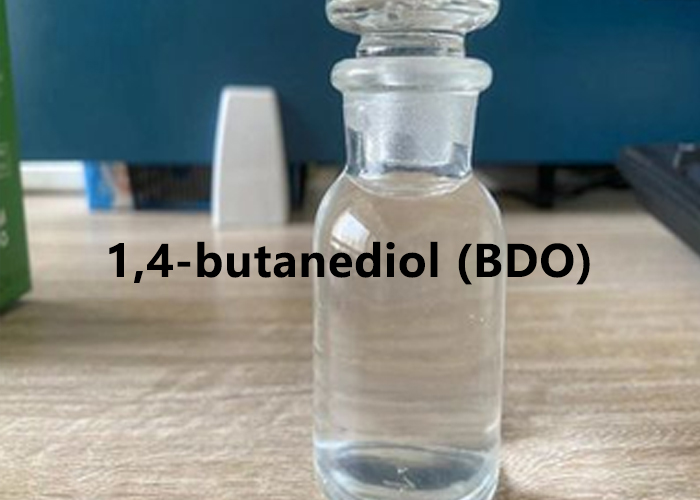
1,4-Butanodiol (BDO): un producto químico versátil para aplicaciones industriales.
1,4-butanodiol (BDO)El butano-1,4-diol (BDO) es un compuesto químico de gran valor en la industria moderna. A temperatura ambiente, se presenta como un líquido oleoso incoloro miscible con agua, alcoholes, cetonas y muchos otros disolventes orgánicos. Su excelente solubilidad y estabilidad química lo convierten en una materia prima indispensable para una amplia gama de aplicaciones. La singular estructura molecular del 1,4-butanodiol, con dos grupos hidroxilo, le confiere una alta reactividad, lo que le permite participar en numerosas reacciones de síntesis orgánica.
Métodos de producción de 1,4-butanodiol
La producción de butano-1,4-diol (BDO) implica varios procesos químicos establecidos. Actualmente, el método acetileno-aldehído es la principal ruta industrial. En este proceso, el etino y el formaldehído se combinan en presencia de catalizadores para producir 1,4-butinodiol (BYD), que posteriormente se hidrogena para obtener butano-1,4-diol (BDO). Este método es altamente eficiente y ampliamente utilizado por los grandes productores. Otras técnicas de producción incluyen el método del anhídrido maleico y el método de la epiclorhidrina. Cada método tiene sus ventajas particulares: la ruta acetileno-aldehído ofrece alta pureza y rendimiento, mientras que los métodos alternativos brindan flexibilidad según la disponibilidad de materia prima y consideraciones económicas.
Aplicaciones del 1,4-butanodiol BDO
El 1,4-butanodiol (BDO) tiene un amplio espectro de aplicaciones en diversas industrias. En el sector del poliuretano, el 1,4-butanodiol es una materia prima fundamental para la producción de resinas y elastómeros de poliuretano. Estos materiales se utilizan en componentes de automoción, suelas de calzado, cuero sintético y otros productos de consumo. La incorporación de BDO mejora la elasticidad, la resistencia al desgaste y el rendimiento mecánico de los productos a base de poliuretano.
En la industria del poliéster, el butano-1,4-diol es esencial para la fabricación de plásticos de ingeniería de tereftalato de polibutileno (PBT). El PBT es conocido por su excelente resistencia al calor, estabilidad química y propiedades eléctricas, lo que lo hace muy adecuado para componentes electrónicos y eléctricos, piezas de automóviles y aplicaciones aeroespaciales. La versatilidad de1,4-Butanodiol BDOGarantiza que los fabricantes puedan producir polímeros de alto rendimiento adaptados a las exigentes necesidades industriales.
Con la creciente conciencia ambiental, el 1,4-butanodiol (BDO) cobra cada vez más importancia en la producción de plásticos biodegradables. Es un monómero clave en la síntesis del tereftalato de adipato de polibutileno (PBAT), un polímero biodegradable que está ganando terreno en envases y otros productos desechables. A medida que las regulaciones que restringen los plásticos convencionales se vuelven más estrictas, la demanda de alternativas biodegradables sigue aumentando, lo que presenta importantes oportunidades de crecimiento para BDO en este segmento.
Además,1,4-Butanodiol BDOes un precursor de numerosos productos químicos finos. Puede convertirse en γ-butirolactona (GBL) y tetrahidrofurano (THF). La GBL puede procesarse posteriormente enN-metil-2-pirrolidona (NMP)El 1,4-butanodiol se utiliza ampliamente como disolvente y agente de limpieza en la producción de baterías de iones de litio. A su vez, el THF es una materia prima fundamental para la síntesis de poli(éter tetrametileno)glicol (PTMEG), un componente crucial en la fabricación de fibras de elastano, ampliamente utilizadas en la industria textil y de la confección. Estas aplicaciones ponen de manifiesto el papel indispensable del 1,4-butanodiol tanto en la fabricación química tradicional como en el sector de los materiales avanzados.
Ventajas del butano-1,4-diol (BDO) en aplicaciones industriales
El uso generalizado del butano-1,4-diol (BDO) se debe a sus extraordinarias propiedades. Su alta estabilidad química garantiza un rendimiento constante en la síntesis de polímeros, mientras que sus dos grupos funcionales hidroxilo proporcionan flexibilidad en las reacciones químicas. El 1,4-butanodiol permite a los fabricantes adaptar las estructuras de los polímeros a requisitos específicos de rendimiento mecánico, térmico o químico. Además, el butano-1,4-diol es compatible con diversos sistemas de reacción, lo que lo convierte en la opción preferida en la producción química a escala industrial.
Desde la perspectiva de la cadena de suministro, la producción de butano-1,4-diol (BDO) se apoya en tecnologías de fabricación consolidadas y redes de distribución globales, lo que garantiza un suministro fiable para los usuarios finales. Las industrias pueden obtener 1,4-butanodiol de alta calidad de forma constante, lo que facilita la producción a gran escala de poliuretano, poliéster y plásticos biodegradables sin preocuparse por la escasez de materia prima. La capacidad de mantener una calidad constante en todos los lotes de producción es una razón clave por la que el butano-1,4-diol (BDO) sigue siendo un pilar fundamental de la química moderna de polímeros.
Perspectivas del mercado para el 1,4-butanodiol
Se prevé que la demanda de butano-1,4-diol (BDO) continúe creciendo debido a sus diversas aplicaciones industriales. En los sectores automotriz y del calzado, la necesidad de productos de poliuretano duraderos y elásticos impulsa el consumo constante de 1,4-butanodiol. Las industrias electrónica y eléctrica dependen del butano-1,4-diol para componentes de PBT de alto rendimiento. Asimismo, la creciente popularidad de los plásticos biodegradables y los polímeros sostenibles refuerza aún más la trayectoria de crecimiento del BDO a nivel mundial.
Los productores también están invirtiendo en mejorar la eficiencia de los procesos y explorando rutas de producción alternativas para satisfacer la creciente demanda mundial. Al optimizar las técnicas de producción, las empresas químicas pueden ofrecer BDO con mayor pureza, mejor rendimiento y precios competitivos, lo que garantiza que las industrias usuarias finales puedan seguir ampliando sus aplicaciones tanto en mercados tradicionales como emergentes.
Conclusión
En resumen, el 1,4-butanodiol (BDO) es un compuesto químico versátil y esencial que desempeña un papel fundamental en la fabricación moderna. Desde la producción de poliuretano y poliéster hasta plásticos biodegradables y productos químicos finos, el BDO impulsa la innovación en múltiples industrias. Sus excelentes propiedades químicas, junto con tecnologías de producción robustas y una fuerte demanda en el mercado, convierten al butano-1,4-diol (BDO) en un material clave para los fabricantes que buscan polímeros de alto rendimiento y soluciones sostenibles. A medida que se expanden las aplicaciones industriales a nivel mundial, el 1,4-butanodiol seguirá siendo un pilar fundamental de la producción química, ofreciendo fiabilidad, versatilidad y un importante potencial de crecimiento.